You’re dinking, waiting, watching… and then boom! Your opponent speeds it up right at you. If you’re not ready, the point’s over in a flash. However, if you can anticipate, read the play, stay calm, and counter with control, the rally shifts quickly in your favor.
Learning to handle and respond to speed-ups is one of the key skills that separates intermediate players from advanced ones. It’s not just about quick reflexes. It’s about knowing what to expect, what to look for, and what to do next.
Why Speed-Up Patterns Matter
Pickleball points often hinge on that one moment when a player speeds up the ball—usually during a dink exchange or just after a reset. The player who controls that moment often controls the point.
Great players don’t just react to speed-ups. They anticipate them. They also recognize that most players have go-to speed-up locations—often middle or to the opponent’s paddle-side shoulder. Knowing the patterns helps you prepare.
And when it’s you speeding it up? The best players follow with a plan, not a hope.
Speeding Up: How to Start the Fire
The key to a good speed-up is catching your opponent off guard without catching yourself out of position. When done well, it creates a fast-paced exchange that you’re ready for—and they aren’t.
Tips for Speeding Up Effectively:
Choose your moment—don’t force it. Look for high or attackable dinks.
Aim at the paddle-side shoulder or hip. That’s the hardest place to defend quickly.
Stay balanced and expect the counter. Your job’s not done after the first attack.
Mix up placement—middle, body, wide—so you’re not predictable.
Countering the Speed-Up: Stay Calm, Play Smart
You don’t need to win the point with your first counter. Your job is to neutralize the attack and stay in the rally.
Tips for Fast-Hands Defense:
Keep your paddle up and out in front. Chest height is ideal.
Watch their paddle, not the ball—it gives away their intention early.
Use short, controlled punches—not big swings.
Block wide to their feet or reset into the kitchen if off-balance.
Common Speed-Up and Counter Patterns
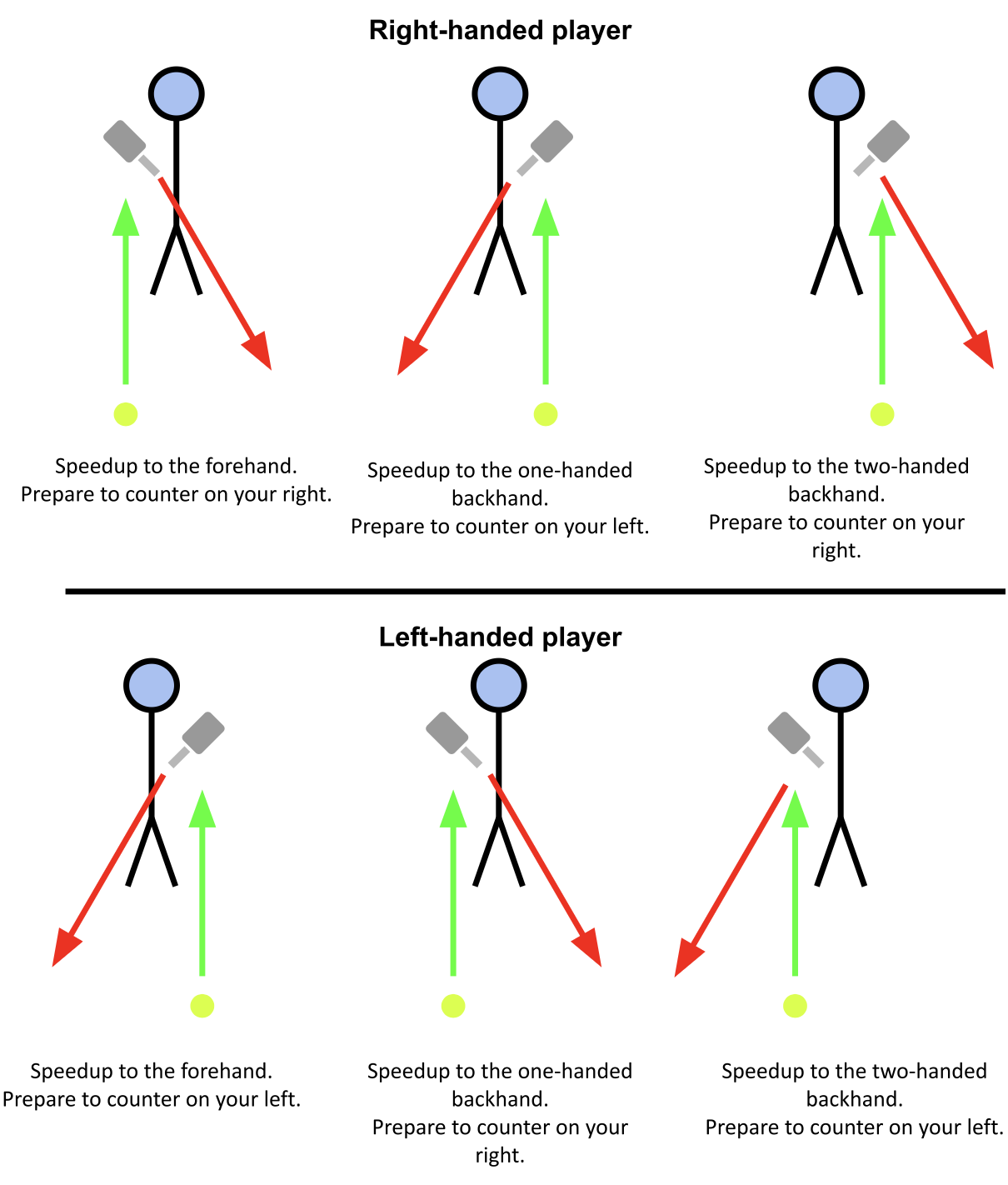
When to Speed Up, When to Counter
Speed up when:
Your opponent’s paddle is down or out of position.
You get a high dink or floating third.
You’re confident and ready to follow up with fast hands.
Counter or reset when:
You’re on your heels or jammed at the body.
You can’t hit with control.
The ball is too low to attack.
Final Thought
Speed-ups are exciting, but they’re not just about hitting hard. They’re about choosing when and where to attack—and being ready for what comes next. The best players don’t win the point with a single shot—they win it by controlling the exchange.
Next time someone speeds it up? Don’t panic. Stay poised, paddle up, and play the pattern.