
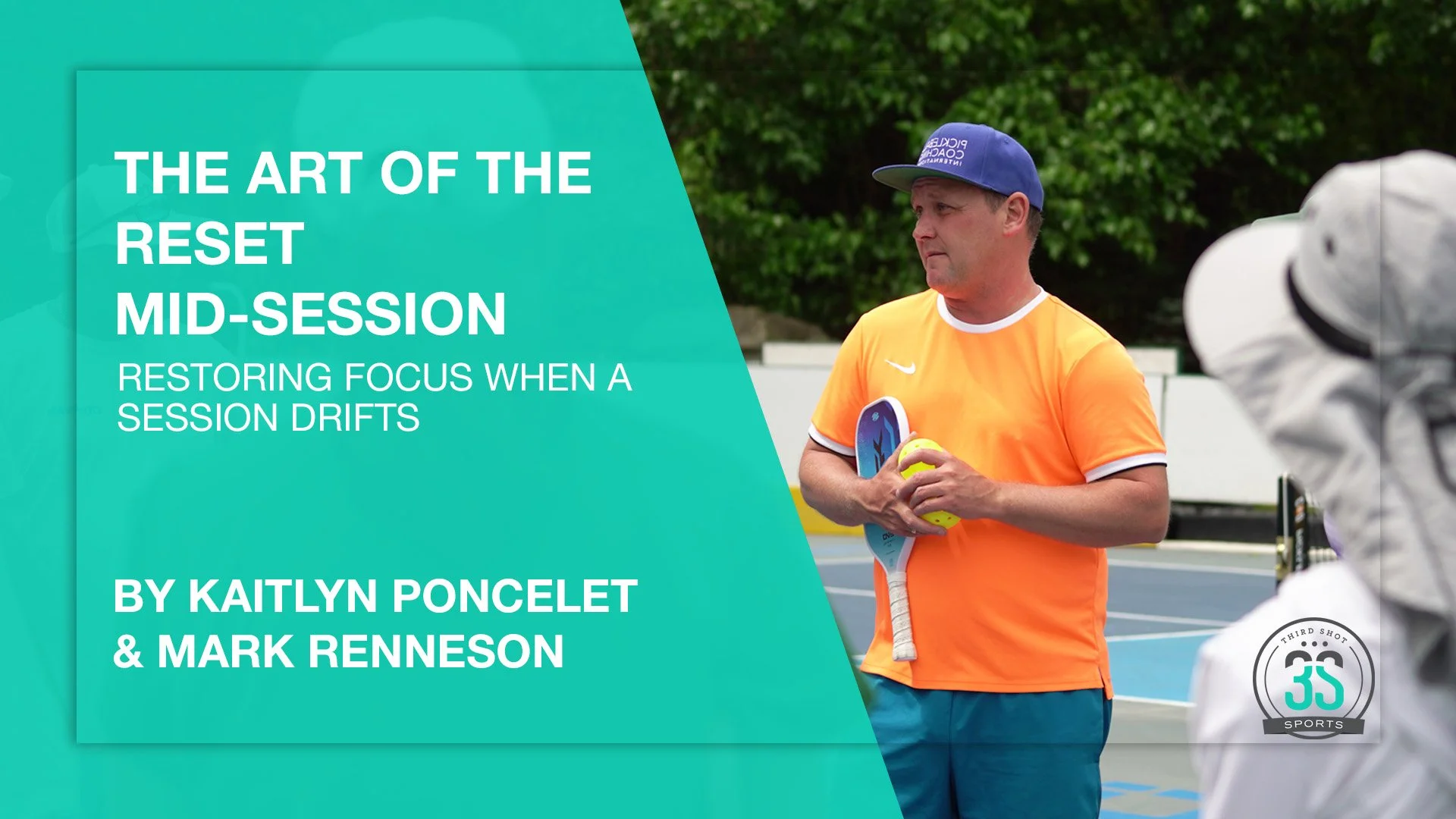
Even the best-planned sessions can lose clarity. Energy drops. Players start going through the motions. The drill keeps running, but learning slows down. In those moments, the instinct is often to explain more or add another layer. Most of the time, that just creates noise.
What the session really needs is a reset. A short, intentional pause that restores focus, sharpens the objective, and puts the session back on track.
Why Resets Work
A good reset clears confusion without overwhelming players. It gives everyone a moment to reconnect with what matters.
Here’s what a reset provides:
Renewed Focus – Players reconnect with the session goal instead of just reacting to the ball.
Improved Energy – A brief pause often sharpens attention and raises engagement.
Coach Control – You regain direction calmly, without rushing or forcing content.
Strong sessions are not the ones that never drift. They are the ones where focus is restored quickly and cleanly.
How to Reset Effectively
Resets should be simple and deliberate. They are not long talks or full re-teaches.
Pause and Reframe
Bring players in and restate the objective and tactic in one clear sentence:
“We’re working on hitting a low third shot to neutralize the opponents ability to attack.”
Change One Variable
If the drill has gone stale, adjust a single element. Switch partners, flip sides, or adjust the challenge. Small changes often bring immediate clarity.
Reduce the Noise
Remove extra rules, cues, or constraints that may be cluttering the lesson. Fewer instructions usually lead to better decisions.
Final Thoughts
A reset is not an admission of failure. It is a sign of awareness. Strong coaches read the room and adjust in real time.
When a session starts to drift, resist the urge to talk more. Pause, clarify, simplify, and get players moving again. The ability to reset mid-session is a subtle coaching skill, but it is one of the most valuable tools you can develop.