
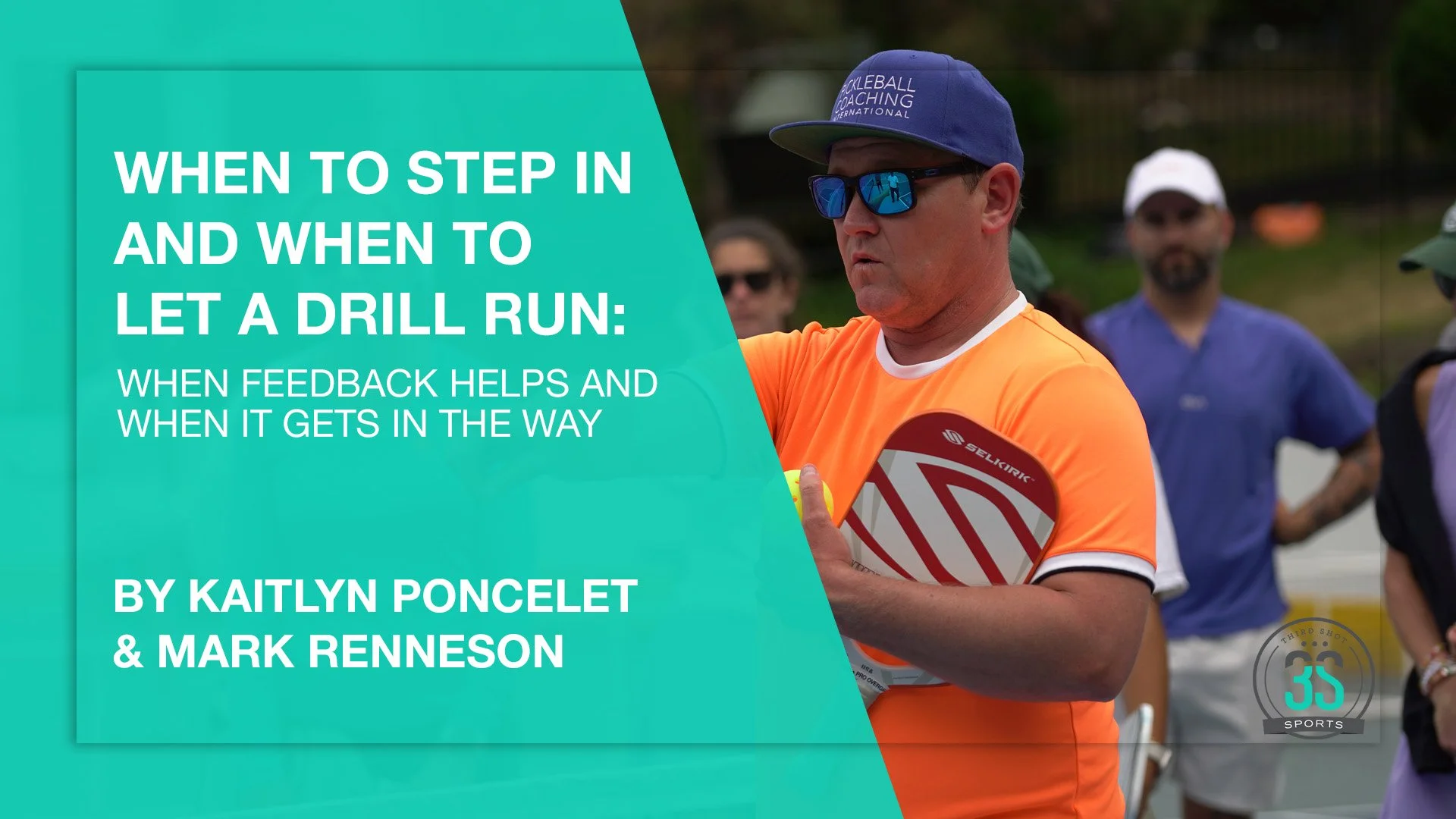
It’s tempting to stop a drill the moment something goes wrong. After all, mistakes are easy to spot. But constant interruptions can do more harm than good. Players need time to feel, adjust, and problem-solve on their own. The challenge is knowing when stepping in helps—and when it actually slows learning.
Why Timing Matters
Learning happens through repetition, not just explanation. The timing of your feedback determines whether players build awareness or dependency.
Here’s what happens when you manage interruptions well:
Better Rhythm – Players stay in flow and build confidence through continuous reps.
Stronger Awareness – Athletes begin to self-correct instead of waiting for answers.
More Impactful Feedback – Corrections land better when players are ready to hear them and help foster improvement faster.
How to Decide When to Step In
Let the drill guide you.
Let It Run
If players are experimenting, adjusting, or showing awareness—even with imperfect execution—keep it going.
Stop the Drill
If the same mistake repeats without change, confusion is visible, or the drill drifts from the original goal, it’s time to pause and reframe.
Coach the Next Rep
If you stop the play, your feedback should clearly change what happens next. If it won’t, let learning continue.
Final Thoughts
Great coaching isn’t about constant correction. It’s about trusting the drill, observing what the players are telling you through their movement, and choosing the right moment to step in. Let the reps do their work. When you do offer feedback, make it intentional, timely, and aimed at shaping the very next action.