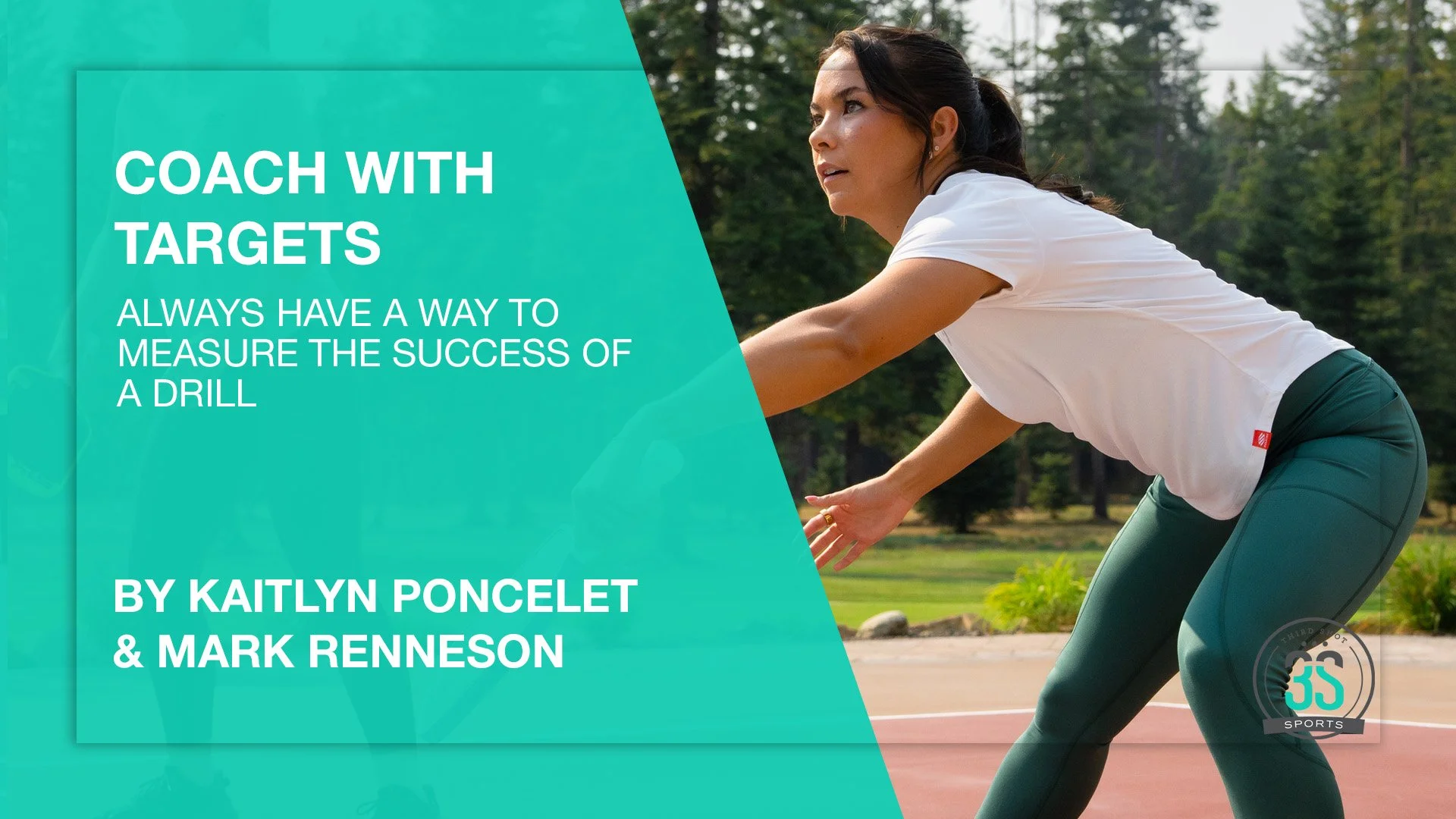
Sometimes players need more than verbal instructions. A simple cone, line, or mini rule can give structure to your drill and clarity to your coaching. Targets and constraints help players focus, make better decisions, and build skills in a more game-like way.
Why Targets and Constraints Work
They remove the guesswork and make the purpose of the drill obvious.
Here’s what happens when you add simple cues to your lesson:
Clearer Focus – Players know exactly where they’re aiming or what behavior you’re shaping.
More Intentional Reps – Visuals and rules force players to pay attention and stay engaged.
Better Transfer to Game Play – Constraints mimic the tactical decisions players face in real matches.
How to Use Them Effectively
A few cones or a simple rule can reshape the whole drill.
Add a Visual Target
For example:
“Serve to the back third of the court” → place a line of cones three feet from the baseline.
Use Tactical Constraints
Mini rules like “only backhands allowed” or “you can only score after a drop shot” add a layer of game-like thinking.
Explain the Why
Don’t just use constraints—connect them to your lesson goal:
“We’re using the backhand-only rule to get more reps on that side under pressure.”
Final Thoughts
Players learn best when they have a clear task and a reason behind it. Targets and constraints keep drills purposeful, focused, and fun.
Next time you plan a drill, ask yourself: “Can I shape this with a target or rule?” If the answer’s yes—go for it.